

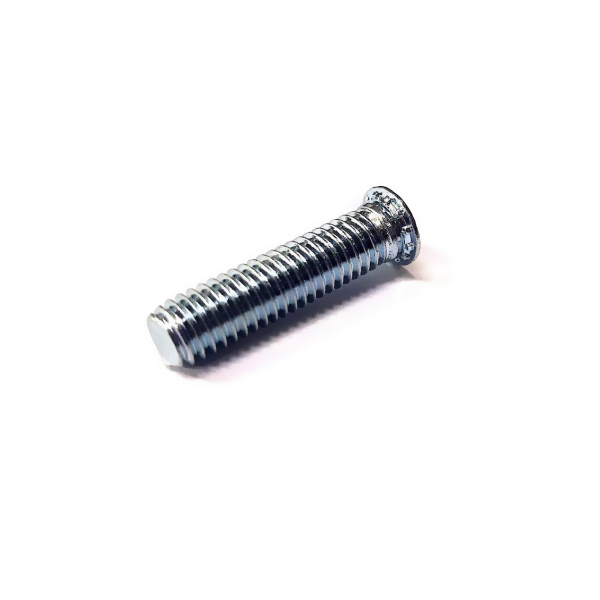
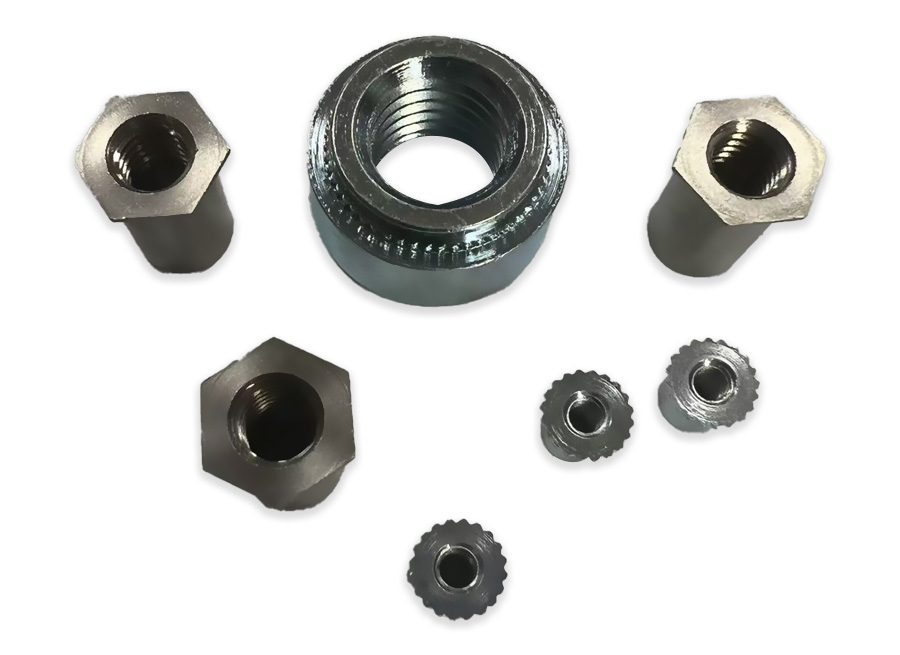
Self-clinching studs are often the best fastening solution for thin sheet metal assemblies, especially when welding, tapping, or using loose hardware is inefficient, weak, or impractical. They provide strong, permanent, flush-mounted attachment points without the need for heat, complex tooling, or thick material.
Below are the situations where self-clinching studs clearly outperform welded studs and threaded fasteners.
1. When the Sheet Metal Is Too Thin to Tap Threads
Tapping threads into sheet metal usually fails when the material thickness is under a few millimeters. The threads strip easily, cannot withstand high torque, and offer poor long-term durability.
Choose self-clinching studs when:
The material is thin-gauge steel, stainless steel, or aluminum
You need reliable, repeatable threads
The sheet cannot be made thicker due to design or weight constraints
Self-clinching studs bring full-strength metal threads into the assembly, even when the sheet is far too thin to accept a tapped hole.
2. When Welding Is Not Practical, Possible, or Allowed
Welded studs require specialized equipment, high heat, and careful control. They may distort thin metal or discolor finished surfaces.
Use self-clinching studs when:
Heat could damage coatings, paint, or powder finishes
Warping or distortion must be avoided
The base material is not weld-friendly
The manufacturing environment restricts welding due to safety or cost
Because self-clinching studs use cold-forming, they avoid all heat-related issues.
3. When You Need Strong Mechanical Resistance in Thin Metal
Self-clinching studs provide exceptional:
Pull-out strength
Torque-out resistance
Vibration resistance
Competing options like loose screws or simple threaded holes cannot match this performance in thin material.
Choose self-clinching studs when the joint must withstand:
Frequent assembly or disassembly
Vibration and shock loads
High clamp force
The metal of the sheet flows into the stud’s undercut during installation, creating a permanent mechanical lock.
4. When a Clean, Flush, Aesthetic Finish Is Required
Welded studs can leave:
Burn marks
Discoloration
Bulges or distortion on the opposite side
Threaded fasteners such as bolts or screws protrude and may interfere with fit or design.
Self-clinching studs produce:
A flush or near-flush surface on one side
A clean, repeatable appearance
No thermal marks or visible deformation
This is particularly valuable in:
Electronics housings
Server chassis
Consumer products
Metal cabinets and enclosures
5. When Speed and Manufacturing Efficiency Matter
Welding requires multiple steps:
Preparation
Alignment
Heating
Cleaning
Inspection
Threading requires drilling, tapping, and often secondary operations.
Self-clinching studs, by contrast:
Install rapidly using a simple press
Require no heat, no sparks, and minimal cleanup
Can be installed in automated or semi-automated processes
Reduce labor and cycle time
This makes them ideal for medium- to high-volume production.
6. When You Need Reliable Threads Over Many Assembly Cycles
Threaded holes in thin metal degrade quickly after repeated screw installation and removal. Welded studs may crack if over-torqued or exposed to vibration.
Self-clinching studs provide:
Hardened, wear-resistant metal threads
Long service life under repeated use
Greater tolerance to operational stresses
This is essential for equipment that needs periodic servicing.
7. When You Must Avoid Weakening the Base Material
Welding alters the metal’s heat-treated properties and may create weak zones or heat-affected areas. Thinning the sheet further by tapping compromises strength.
Self-clinching studs maintain base-material integrity because they rely on cold-form displacement, not material removal or thermal stress. This results in a stronger, more consistent joint.


 0755-23022676
 Customer Service
 sales03@koster.hk