

Self-clinching studs are specialized fasteners designed to create robust, load-bearing threaded attachment points in thin sheet metal, where traditional tapping, welding, or screwing methods are weak, unreliable, or simply impossible. They are installed through a cold-forming process that permanently anchors the stud into the sheet, producing a strong, flush-mounted fastening point.
They are widely used in electronics enclosures, metal chassis, automotive parts, appliance panels, and any assembly that uses thin-gauge metal.
What Exactly Are Self-Clinching Studs?
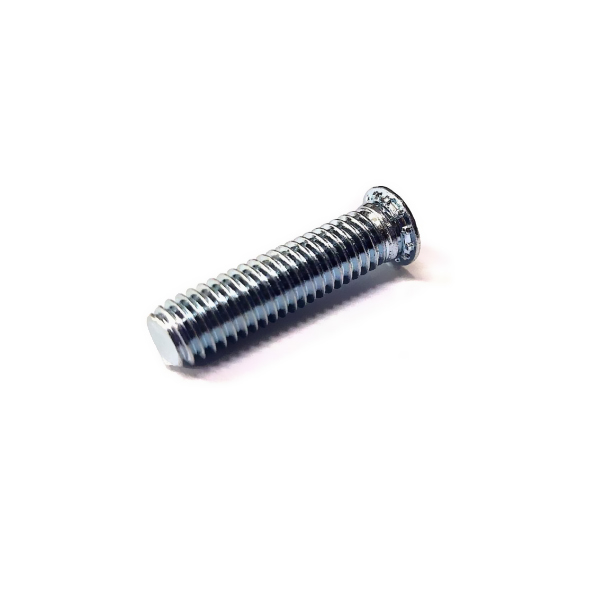
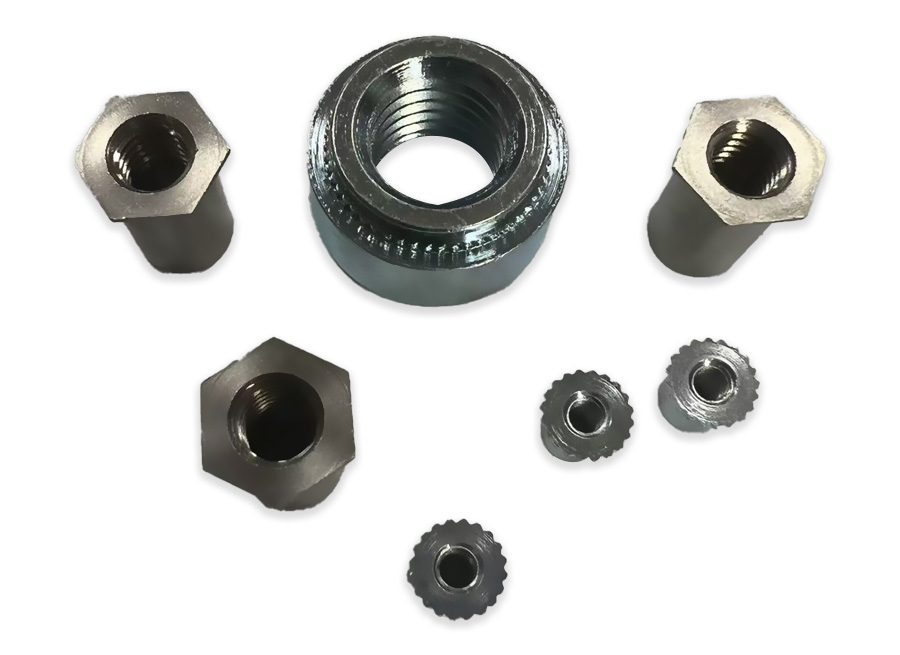
A self-clinching stud is a metal fastener—typically made of steel, stainless steel, or aluminum—featuring:
A threaded shaft (male thread)
A specially shaped head or undercut engineered to embed into sheet metal
A knurled, ribbed, or hex-shaped clinching ring that displaces material during installation
A flush or nearly flush surface finish on the installation side
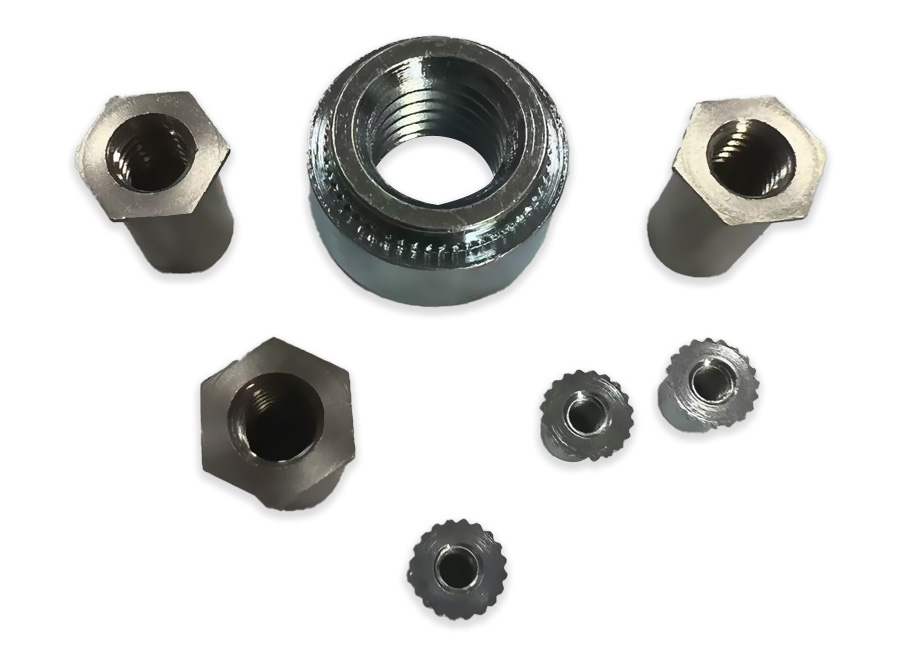
Unlike weld studs or screw fasteners, self-clinching studs do not rely on heat, threading, or adhesive. Instead, they use mechanical deformation to lock into place.
How Do Self-Clinching Studs Provide Strong Threads in Thin Sheet Metal?
Self-clinching studs achieve their strength through a combination of metal flow, mechanical interlocking, and friction. Here's how the process works.
1. Cold Forming Causes the Sheet Metal to Flow Into the Undercut
During installation, the stud is pressed into a punched hole using controlled force. As pressure is applied:
The ring or clinching feature of the stud is forced into the sheet metal
The metal around the hole undergoes localized plastic deformation
The displaced metal flows into the stud’s undercut or recess
This flow creates a 360-degree mechanical lock, preventing the stud from pulling out.
This metal-flow principle is the same reason why clinched studs provide so much strength despite being installed into very thin material.
2. The Knurled or Ribbed Clinching Zone Prevents Rotation
To keep the stud from rotating when a screw or nut is tightened onto it, the stud has:
Knurls
Ribs
Hexagonal profiles
Grooved features
As the metal flows into these features, friction and shape-interlock combine to resist rotation. This is why self-clinching studs often outperform weld studs in torque resistance.
3. The Pressed Joint Becomes an Integral Part of the Sheet
Once installed, the stud is not simply “attached”—it becomes permanently embedded into the sheet. This creates:
High axial load capacity
High torque-out resistance
Consistent alignment
Reliable behavior under vibration
Because no heat is involved, the sheet metal’s mechanical properties are not compromised (unlike welded joints).
4. They Provide Threads Where the Sheet Is Too Thin to Tap
Thin-gauge metal (0.5–3 mm) does not have enough thickness to support machine screw threads. Tapping directly into it leads to:
Weak threads
Stripping
Poor clamp load
Self-clinching studs bypass this limitation by introducing a fully formed metal thread that is anchored mechanically rather than cut into the sheet. This makes them ideal for lightweight assemblies.
5. The Installation Creates a Flush or Low-Profile Finish
On the side where the stud is inserted, the head sits flush or nearly flush with the sheet surface. This is perfect for applications that need:
A smooth outer surface
Aesthetic appearance
No protruding fastener heads
Clearance for mating components
This advantage is a major reason they are used in electronics enclosures and precision sheet-metal assemblies.
Where Are Self-Clinching Studs Commonly Used?
Because they offer strong, repeatable load-bearing points in thin metal, they appear across many industries:
Electronic housings and server chassis
Metal cabinets and enclosures
Automotive interior/exterior panels
Aerospace components
Industrial machinery covers
Appliances and HVAC units
Telecommunications hardware
Anywhere thin sheet metal needs durable attachment points, self-clinching studs are often the best choice.


 0755-23022676
 Customer Service
 sales03@koster.hk