

How Do Self-Tapping Threaded Inserts Improve Strength in Soft Materials?
Self-tapping threaded inserts strengthen soft materials—such as plastics, wood, aluminum, and magnesium—by creating a durable, load-bearing internal thread that far exceeds the strength of the host material. Instead of relying on weak, easily stripped native threads, the assembly gains a hardened metal thread interface with superior mechanical performance.
Here’s a detailed look at how they achieve this improvement.
1. They Replace Weak Native Threads With Strong Metal Threads
Soft materials cannot withstand:
High tightening torque
Repeated assembly cycles
Vibration or shock loads
Self-tapping inserts provide high-strength internal threads, allowing the use of standard machine screws without damaging the base material. The metal-to-metal thread interface dramatically increases:
Torque strength
Fatigue resistance
Wear resistance
This is the most fundamental way inserts improve overall joint performance.
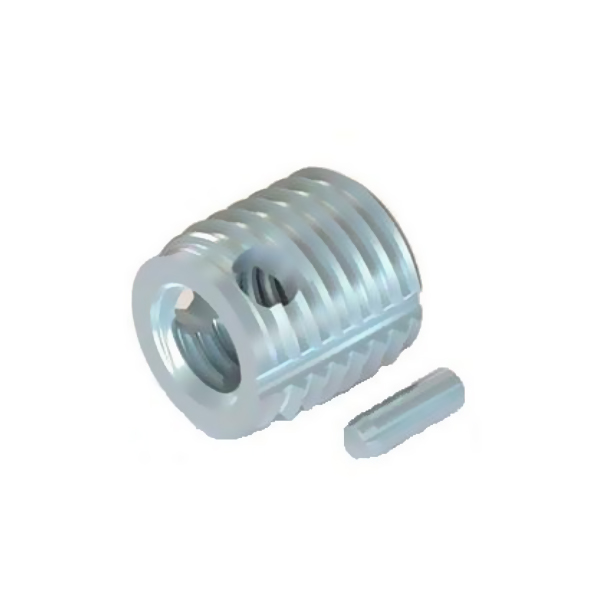
2. Their Self-Tapping Action Creates Mechanically Locked External Threads
As the insert is driven into the material, its external cutting flutes or knurling cut or form mating threads directly into the base material. This produces:
Deep mechanical engagement
High resistance to pull-out
Strong radial expansion forces that anchor the insert
Because the insert essentially forms its own custom-fit seat, the joint becomes significantly more resistant to stripping and loosening.
3. They Distribute Loads Over a Larger Surface Area
Native threads in soft materials typically engage only a shallow depth, causing high stress concentration. In contrast, inserts:
Have larger external surfaces
Engage more material volume
Spread tensile and shear forces across a wider area
The result is a stronger and more stable joint, especially in plastics and wood where compression strength is low.
4. They Reduce Stress and Cracking Around the Screw Hole
Driving a machine screw directly into a soft material often causes:
Localized cracking
Material bulging
Thread deformation
A self-tapping insert mitigates these issues by:
Creating a clean, stable thread geometry
Controlling expansion through engineered external features
Providing a rigid interface that prevents over-tightening damage
This improves the durability of the assembly and prevents long-term structural damage.
5. They Enable Higher Installation Torque Without Material Failure
With a self-tapping insert installed, the limiting factor becomes the strength of the insert, not the host material. This allows for:
Higher tightening torque
Better clamp load
More reliable mechanical fastening
This is especially valuable in applications that require vibration resistance or safety-critical performance.
6. They Allow Repeated Assembly Without Thread Degradation
Soft materials quickly wear or deform after multiple screw cycles. Inserts solve this by:
Withstanding repeated tightening
Preventing thread wear
Maintaining consistent engagement over the product’s lifetime
This is essential for consumer electronics, machinery covers, automotive panels, and serviceable equipment.
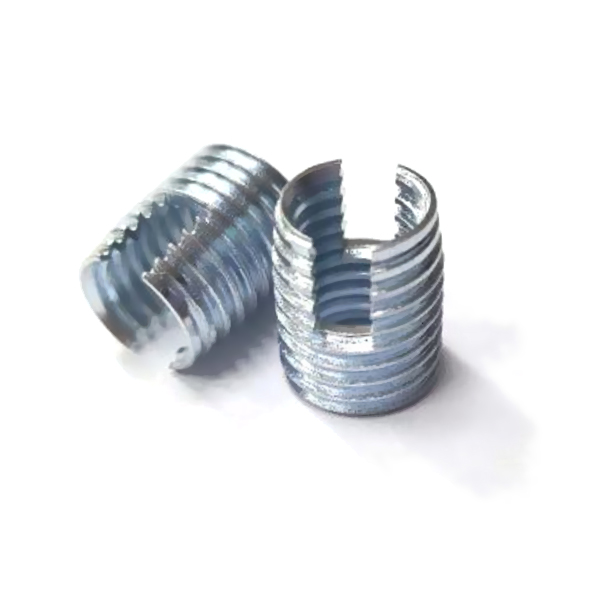
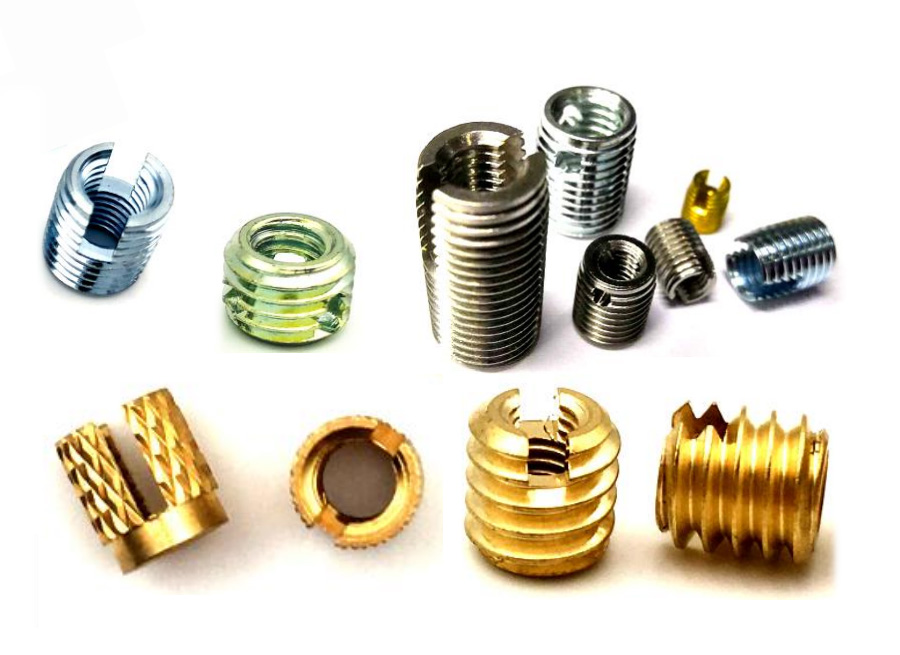
7. Their Engineered Geometry Enhances Anchoring Performance
Depending on design, inserts may feature:
Knurled bodies
Spiral flutes
Cutting edges
Expansion slots
Hexagonal exteriors
Each feature increases grip and mechanical lock, making the insert extremely difficult to loosen or pull out under load.


 0755-23022676
 Customer Service
 sales03@koster.hk