

Choosing the best self-tapping threaded insert depends on several key factors: the material you are working with, the mechanical loads the joint must withstand, the installation method available, and whether the assembly will require frequent servicing. Below is a structured explanation to help you identify the right insert type for your specific application.
1. Start From the Host Material
Different materials require completely different insert designs.
Here’s how to approach material-based selection:
• Plastics (ABS, PC, nylon, PP, 3D-printed parts)
Plastics are soft and prone to thread stripping. For these materials, the best choices are:
Self-tapping inserts designed for plastics with cutting flutes or spiral threads.
Heat-stake or ultrasonic inserts when high strength and vibration resistance are required.
These options create reliable metal threads and prevent cracking or deformation.
• Wood, MDF, plywood, softwood and hardwood
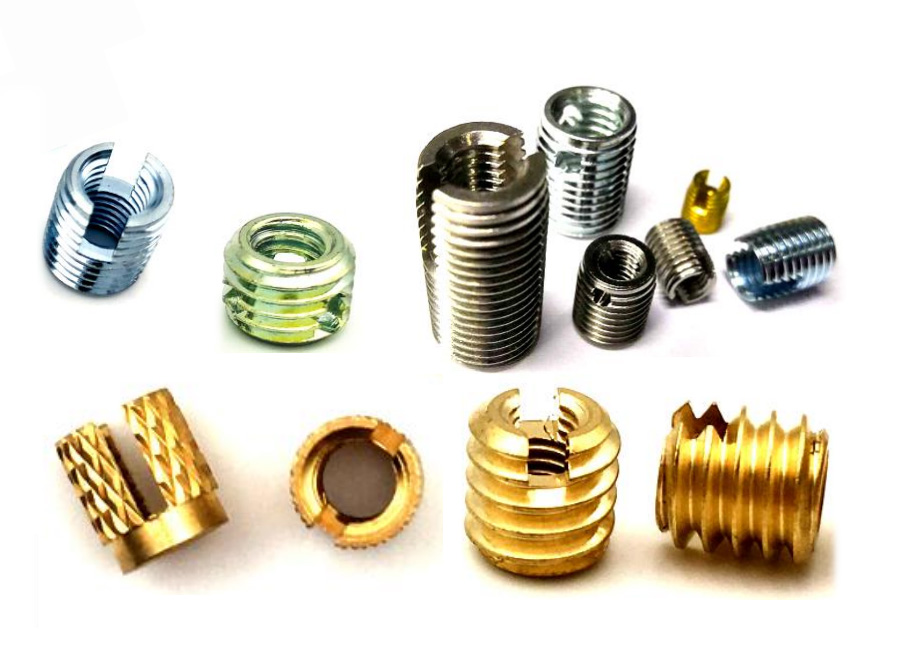
Soft or fibrous wood materials need inserts that bite deeply without splitting the grain. Recommended options include:
Screw-in self-tapping inserts with coarse outer threads.
Press-in inserts for applications where torque resistance is critical.
These inserts dramatically improve pull-out strength compared to wood screws.
• Soft metals (aluminum, magnesium, die-cast alloys)
Soft metals can deform under repeated assembly. The best choices include:
High-strength steel or stainless-steel self-tapping inserts
Hex-drive or Torx-drive inserts for better installation torque control
These provide durable threads that outperform direct tapping in softer alloys.
• Thin sheet metal and hollow structures
If the material is too thin to cut internal threads, traditional self-tapping inserts may not work. Instead, choose:
Rivet nuts (blind threaded inserts)
Specialized threaded inserts for sheet metal
These create strong internal threads even in very thin panels.
2. Consider the Mechanical Requirements
Not all applications demand the same strength. Match the insert to the load:
• High torque and high pull-out strength
Use inserts with:
Deep knurling
Aggressive cutting flutes
Hardened steel construction
These maximize grip and resist loosening under vibration.
• Frequent assembly and disassembly
Choose inserts that:
Offer hardened internal threads
Resist wear and thread deformation
For serviceable products or maintenance-heavy equipment, metal inserts are essential.
• Corrosive or outdoor environments
Select inserts made of:
Stainless steel
Corrosion-resistant treated steel
These prevent rust and preserve long-term reliability.
3. Match the Insert to Your Installation Method
Your manufacturing process matters. Different inserts suit different workflows:
• Manual installation
Ideal inserts include:
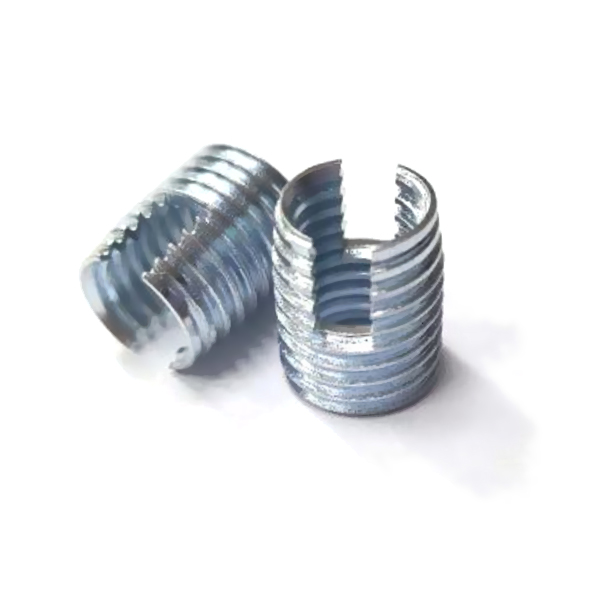
Screw-in self-tapping inserts
Hex-drive or Torx-drive varieties
They are easy to install and suitable for low-volume production or repairs.
• Automated or high-volume production
The most efficient options are:
Heat-stake or ultrasonic inserts for plastics
Press-in or mold-in inserts for molded components
These provide consistent quality with minimal labor.
• Retrofit or repair situations
When repairing stripped threads or retrofitting existing parts, choose:
Screw-in self-tapping inserts
Oversized inserts for damaged holes
They restore strong threads without redesigning the part.
4. Practical Recommendations by Application Scenario
To help you narrow down the options, here are typical recommendations:
• Plastic housings, electronics, 3D-printed parts
Use self-tapping inserts designed for plastics or heat-stake inserts.
• Wood furniture, wooden joints, fixtures
Use coarse-thread, screw-in wood inserts that resist pull-out and splitting.
• Automotive, machinery, metal enclosures
Use steel or stainless-steel self-tapping inserts for durable threads.
• Thin sheet metal or hollow parts
Use rivet nuts or blind inserts rather than normal self-tapping inserts.
• Equipment requiring repeated maintenance
Use hard-metal, wear-resistant inserts to prevent thread fatigue.
5. Key Takeaway
There is no single “best” self-tapping threaded insert—
the best insert is the one that matches your material, load, installation method, and durability requirement.


 0755-23022676
 Customer Service
 sales03@koster.hk