

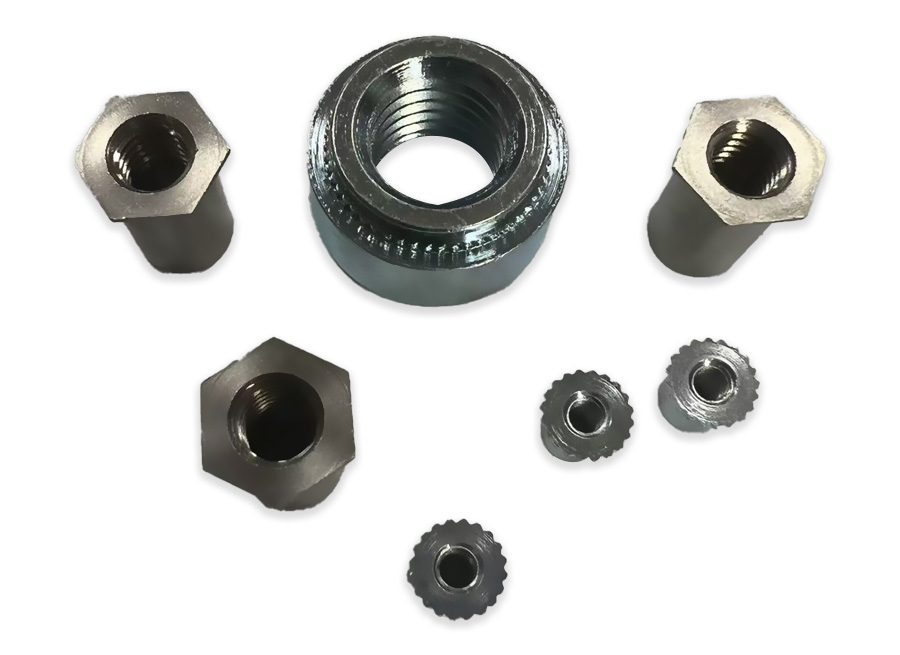
Self-anchoring threaded inserts are engineered to create strong, durable threads in soft, brittle, or low-strength materials. But they are not the only fastening option available. So the important question becomes: in which situations are self-anchoring inserts the best choice compared to screws, molded-in inserts, rivet nuts, helical coils, or standard self-tapping inserts?
Below are the scenarios where self-anchoring threaded inserts clearly outperform other solutions.
1. When the Base Material Is Too Soft to Hold Threads on Its Own
Materials like plastic, MDF, plywood, particle board, fiberglass, and soft aluminum cannot reliably retain machine screw threads. Direct tapping leads to stripping, loosening, or cracking.
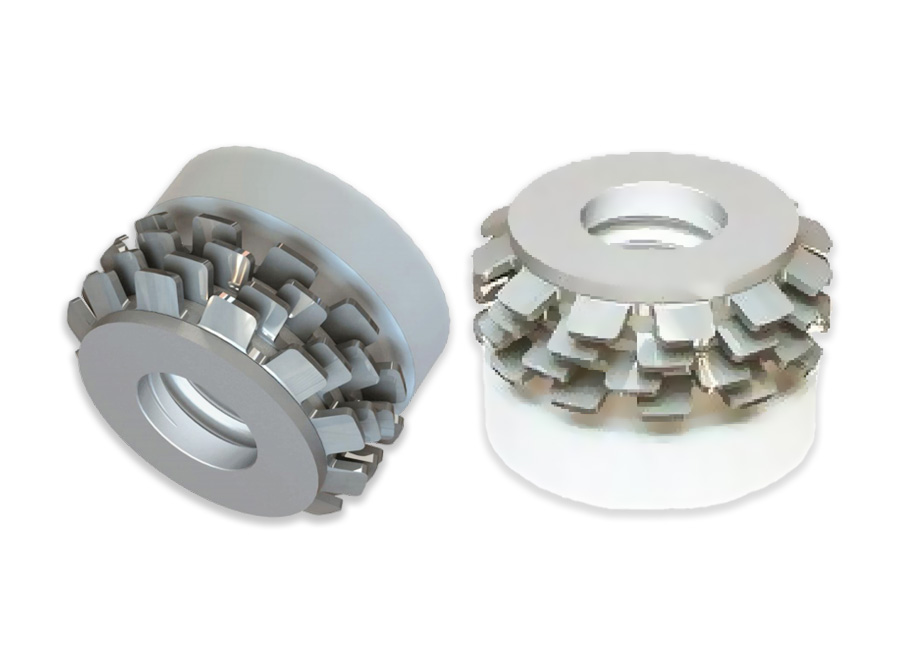
Self-anchoring inserts are ideal when the host material:
Has low shear strength
Cannot support high clamping loads
Distorts under torque
Fails after only a few assembly cycles
Because they anchor mechanically into the substrate, they create a metal-to-metal thread interface that remains stable even under stress.
Best choice for:
Thermoplastics
Composites
Pressed wood & MDF
3D-printed materials
Aluminum and magnesium castings
2. When You Need Strong Resistance to Pull-Out and Rotation
Compared with simple screws or press-fit inserts, self-anchoring inserts provide superior mechanical locking thanks to:
Knurled or barbed external surfaces
Expansion or material displacement
Undercut engagement
Choose self-anchoring inserts when your application requires:
High pull-out strength
High torque-out resistance
Long-term integrity under vibration
This makes them well suited for assemblies that endure load cycles or external forces.
3. When the Joint Will Be Assembled and Disassembled Repeatedly
Soft materials degrade quickly when screws are installed and removed multiple times. Ordinary screws cut into the material each time, weakening it further.
Self-anchoring inserts prevent this because:
The load is transferred to the metal insert
The internal metal threads resist wear
The surrounding material remains untouched
They are therefore ideal for products that require:
Maintenance
Serviceability
Field repair
Modular replacement
If longevity and repeatability matter, self-anchoring inserts outperform direct screws or low-quality press-fit inserts.
4. When Over-Torqueing Is Likely or Hard to Control
In production environments or end-user situations where installation tools vary, over-tightening can easily strip threads in soft materials.
Self-anchoring inserts help prevent failure because:
Their metal threads tolerate higher torque
Their anchoring mechanism resists rotation
The joint is less sensitive to user error
This makes them safer and more reliable than forming threads directly in weak substrates.
5. When You Need Higher Load Capacity Without Increasing Material Thickness
In thin or weak components, there may not be enough material to cut a strong thread. Instead of redesigning or thickening the part, a self-anchoring insert can:
Maximize load capacity
Improve bolt retention
Increase thread engagement depth
Prevent cracking or deformation
This is especially valuable when weight, size, or cost constraints limit design changes.
6. When Molded-In Inserts Are Not Feasible
Molded-in inserts provide excellent strength in plastic parts, but they require:
Specialized tooling
Controlled molding cycles
Additional mold complexity
Long lead times and higher cost
Self-anchoring inserts are preferable when:
You are working with 3D prints or prototypes
You want to modify an existing molded part
You need to install threads after production
Tooling changes are not allowed
They offer the strength of molded-in inserts with far greater flexibility.
7. When You Need a Stronger Alternative to Wood Screws or Sheet-Metal Screws
Traditional screws loosen over time due to:
Material compression
Creep
Vibration
Thread wear
Self-anchoring inserts solve these issues by providing a reinforced metal interface, making them ideal for wood fixtures, furniture joints, and mechanical attachments.
8. When Precision and Long-Term Stability Are Critical
Choose self-anchoring inserts for applications that must maintain:
Consistent torque values
Accurate alignment
Tight tolerances over many cycles
Structural integrity under environmental variation
This includes aerospace interiors, automotive components, electronics housings, and machinery covers.


 0755-23022676
 Customer Service
 sales03@koster.hk